Per-purpose periods
Each purpose carries its retention in days; consent for that purpose expires when it runs out.
- Shown on the notice, so people know
- Legal-obligation purposes keep their own period
- Changing it changes the schedule
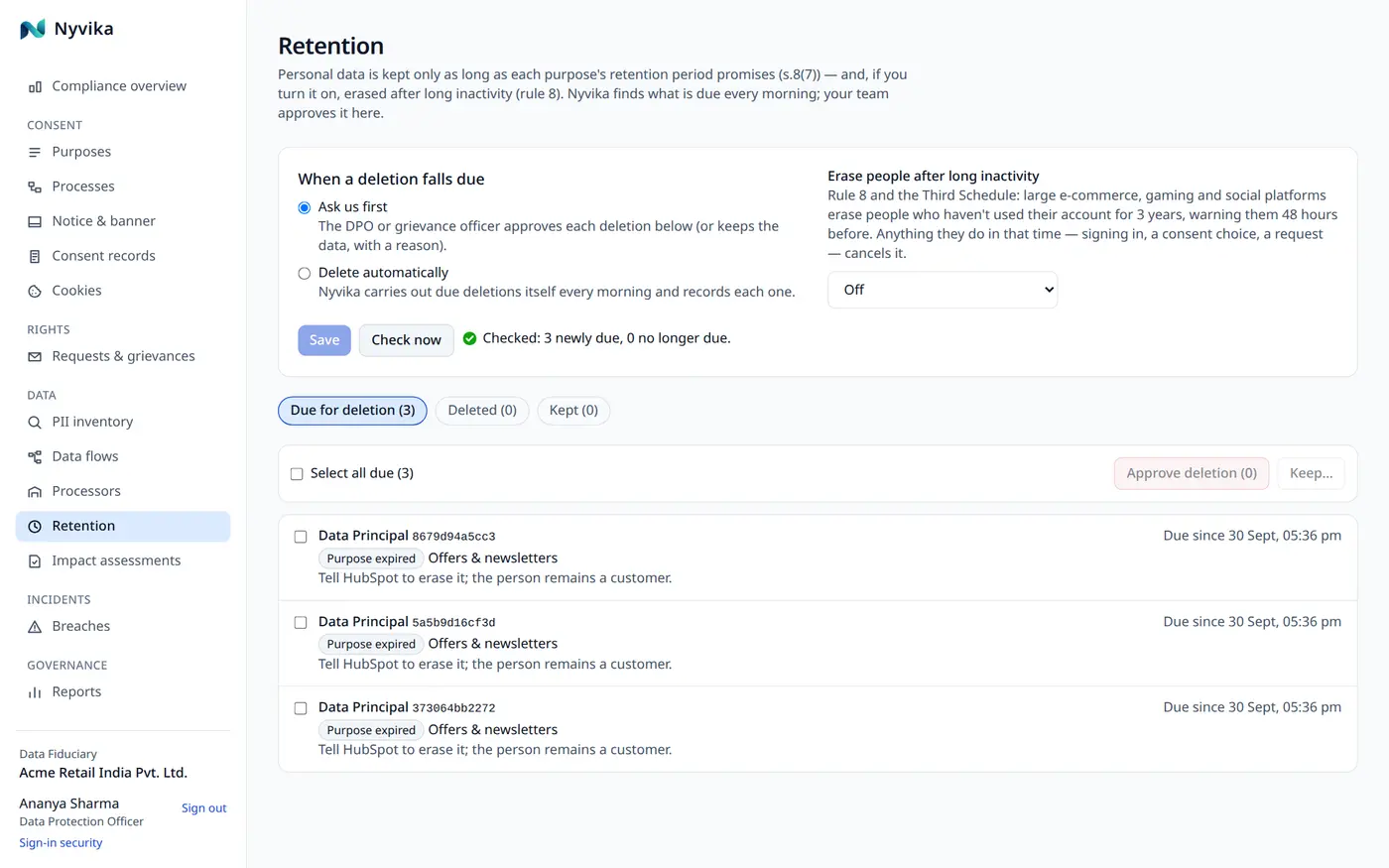
Section 8(7) says erase when the purpose is served or consent is withdrawn. Nyvika turns the retention period you set on each purpose into a schedule, warns the person first, and then erases, including at your processors.
Every system you run keeps data forever unless something deletes it. The Act requires the opposite, and it requires you to warn people before inactivity erasure.
Set the period on the purpose. Nyvika does the rest on a nightly run and shows you what it is about to do.
Each purpose carries its retention in days; consent for that purpose expires when it runs out.
People who have not been seen within the period are warned 48 hours ahead and then erased.
Start in review mode and approve each night's queue; switch to automatic when you trust it.
Erasure is only sent to a processor when every purpose it serves for that person has expired.
Every module writes to the same registers and the same hash-chained evidence, so nothing is re-keyed and nothing is lost between teams.
The retention period on each purpose is what the person was told.
See notice & consent →Erasure instructions go through the same connectors as withdrawals.
See processors & connectors →Erasures redact the ledger without breaking its chain; the proof survives.
See ledger, reports & audit →Model that as a legal-obligation purpose with its own retention, for example tax records for eight years. Consent-based purposes expire on their own clock; the legal one keeps what the law requires and nothing more.
Erasure redacts the personal content of the entries and records a redaction entry; the hashes that chain the records are preserved, so verification still succeeds and shows that an erasure happened, when, and why.
Yes. Review mode shows the nightly queue and does nothing until an officer approves it. Most customers run review mode for the first month.
Still have a question? Write to us.
Bring your purposes and their periods; we will show you tomorrow's queue before you decide.